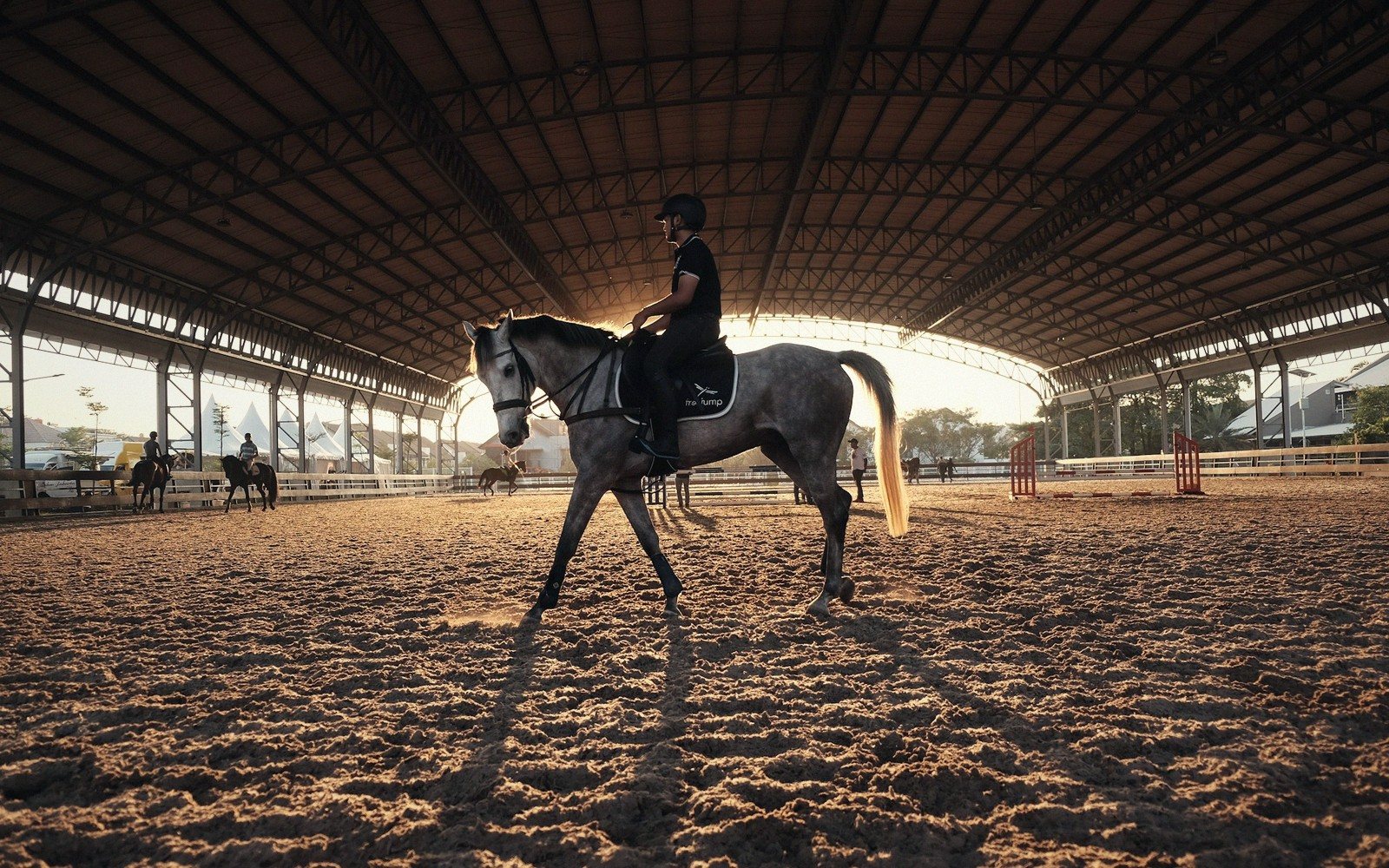
The most informative arena at any show is the one nobody is watching.
Before a single horse enters the main ring, the warm-up arena has already revealed more about the day's likely results than any programme or entry list. It is smaller, louder and more honest: fences are jumped at close range, riders are visibly thinking, and nothing is dressed up for an audience.
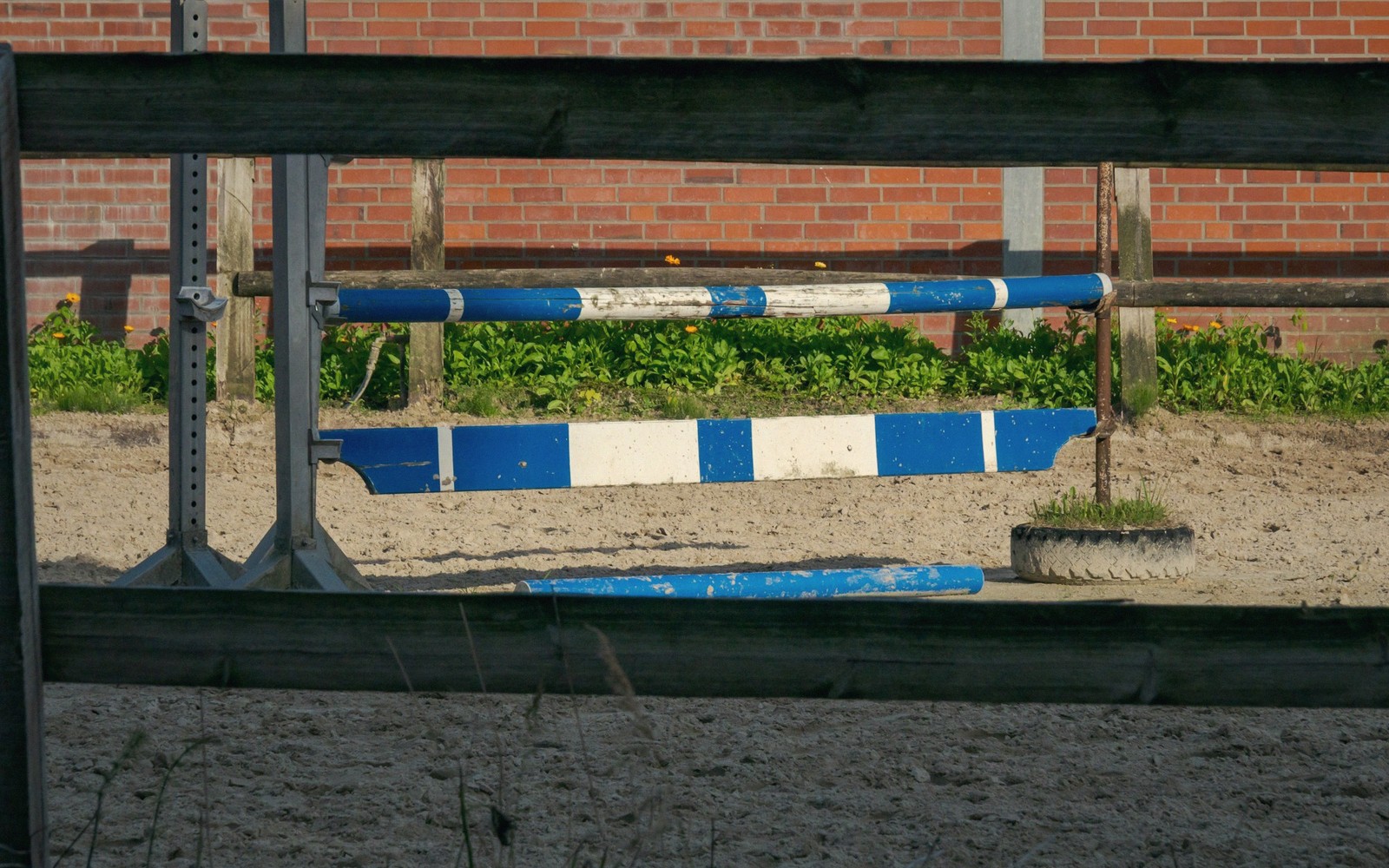
The warm-up fence is typically a practice verticalVerticalA single plane of rails with no spread — a pure height and accuracy question.practice verticalpractice verticalsingle-rail practice fence used to establish rhythm before the main ringsingle-rail practice fence used to establish rhythm before the main ring and a practice oxerOxerA spread fence with two sets of rails, asking for width as well as height.practice oxerpractice oxerspread practice fence used to sharpen a horse's bascule and scopespread practice fence used to sharpen a horse's bascule and scope, managed by a dedicated official called a warm-up stewardwarm-up stewardofficial who supervises practice fences and enforces height limits, whose job is to make sure nobody raises the poles beyond the permitted height. Watch those poles. A horse that needs many repetitions at a modest height, or one that chips awkwardly at the same point every time, is giving you a preview of what the main course will likely expose.
Pay attention to the canter. The rhythm a rider establishes in warm-up is almost always the rhythm they carry through the gate. A horse moving with long, ground-covering strides and an unhurried tempo looks fundamentally different from one that is running, rushed, or overly compressed. Neither picture lies.
The rhythm a rider establishes in warm-up is almost always the rhythm they carry through the gate.
Watch the relationship between rider and horse: are the transitions crisp or laboured? Does the horse move away from a light leg aid or require persuasion? Does it meet the fence on a consistent stride, or does it shuffle and second-guess? These tell you whether horse and rider share a confident agreement — or whether they are still negotiating.
The order in which riders use the warm-up is also informative. Early movers are often horses that need substantial work to settle. A horse that arrives five minutes before its number is called and pops two fences calmly is a horse that trusts the routine. One that has been circling for forty minutes may be difficult, green, or simply having a complicated morning.
You can also read the rider's body language. Calm, deliberate adjustments between fences suggest a clear plan. Repeated attempts at the same fence — especially with increasingly firm riding — suggest something unresolved. The main ring will find whatever the warm-up left unfinished.
None of this is crystal-ball work. Horses that look fractious in warm-up sometimes produce impeccable rounds; ones that appeared settled occasionally unravel when the crowd noise and the arena's open space change the atmosphere entirely. But watching the warm-up shifts you from spectator to reader. By the time the bell rings, you have already formed a considered view — and watching a round with a hypothesis in mind is a different, richer sport altogether.1
The course designer
Licensed official
Plans the track before anyone rides it: fence types, distances, angles and the time allowed. Oversees the build and adjusts for ground and light.
A role on every show, described here without naming individuals.
The fence crew
Arena team
Resets rails between rounds, checks cups and safety devices, and keeps every round on the same track as the one before it.
Role, not a named person.
- warm-up steward
- official who supervises practice fences and enforces height limits
- practice vertical
- single-rail practice fence used to establish rhythm before the main ring
- practice oxer
- spread practice fence used to sharpen a horse's bascule and scope
Every figure in this guide is indicative. Heights, spreads, speeds and distances vary between levels and federations, and the rules of the competition being run always govern.
- A steward polices practice-fence heights and how they are set. ↩
- Nothing in the warm-up is scored, which is why it is honest.