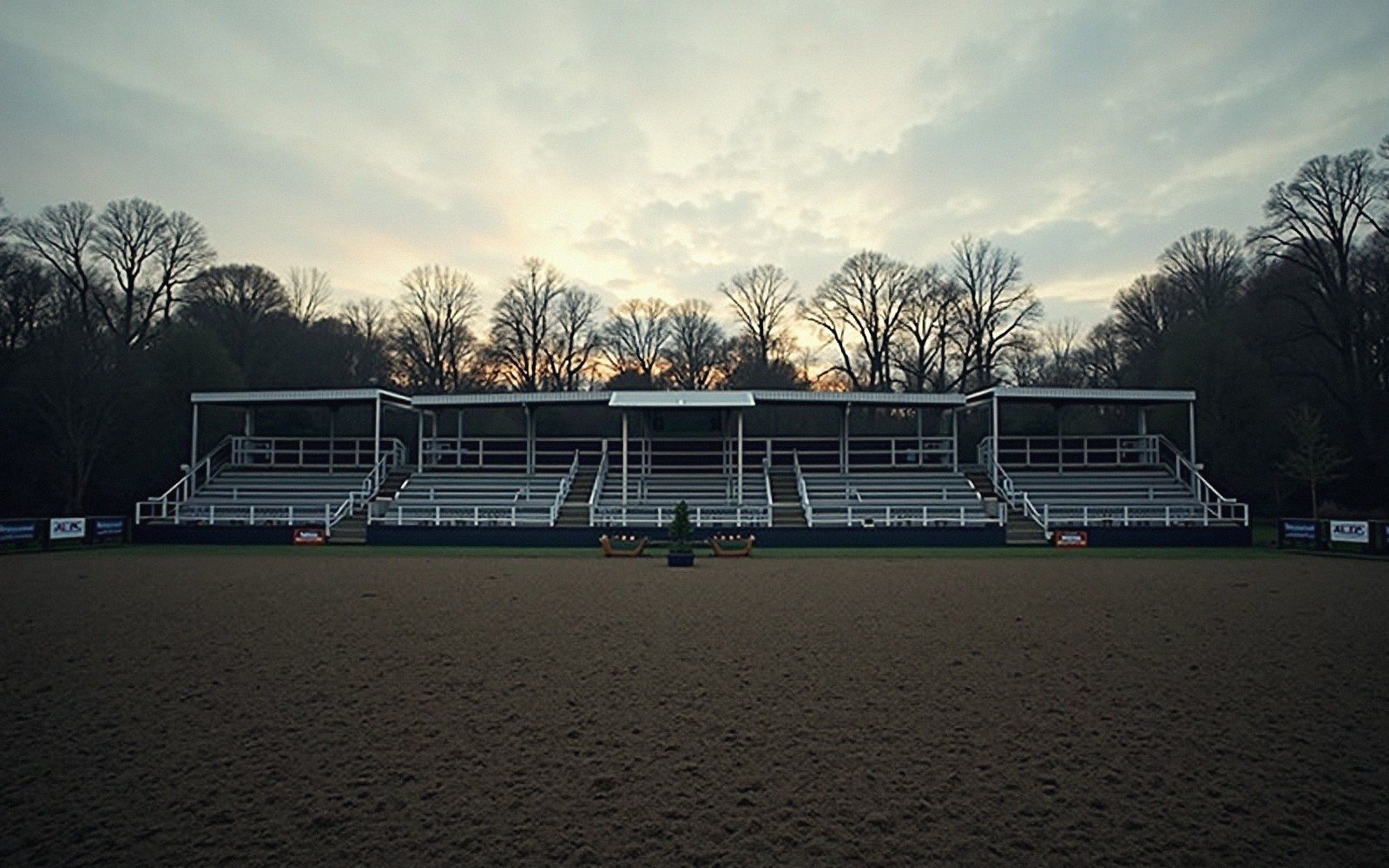
A class looks, from the outside, like a succession of individual rides: horse enters, jumps, exits, repeat. But follow it from the first horse to the last and you'll see something more interesting — a living conversation between the course and the field, where conditions shift, the track teaches, and every round reshapes the one that follows.
It starts before anyone jumps. Draw orderdraw orderthe ballot-determined sequence in which competitors enter the ring — the sequence in which horses and riders go — is typically decided by a random ballot conducted at the competition office, sometimes the evening before, sometimes the morning of the class. That ballot matters more than most spectators realise. The first few horses ride the course as the designer set it: distances fresh, ground untouched, no collective knowledge yet accumulated about where the time is bleeding away or which related distancerelated distancea measured ground line between two fences that influences strideStrideOne full canter step, roughly 3.5 m in a working competition canter. count count count rides longer than the plan suggests. They carry the full weight of the unknown.
The course walks beforehand give every competitor the same chance to measure strides and read lines, but walking a distance and jumping it are different things. Early in the order, what the course asks is largely theoretical. By the middle of the class, it's empirical — riders in the collecting ring are watching the scoreboard and absorbing intelligence from those who've already gone.1
| Phase of the year | What changes about the tracks |
|---|---|
| Indoor season | Tighter arenas, shorter distances, more turning. |
| Spring outdoor | Bigger grass rings and longer galloping tracks. |
| Championship stretch | The heaviest tracks of the year, built to separate. |
| Autumn indoors | Back under a roof, back to accuracy. |
No dates: the shape of the year matters, the calendar does not.
What the middle of the class reveals
A class typically opens with a burst of clears, then the picture becomes more complex. Patterns emerge. A particular fence keeps coming down. The time allowedtime allowedthe maximum time in which a clear round must be completed proves tighter than expected — or surprisingly generous. A combination that looked straightforward on the plan reveals a tricky distance that suits neither a big-strided horse nor a short one without adjusting. Spectators who track the scoreboard across the first third of the class get a working model of where the questions actually live.
Spectators who track the scoreboard across the first third of the class get a working model of where the questions actually live.
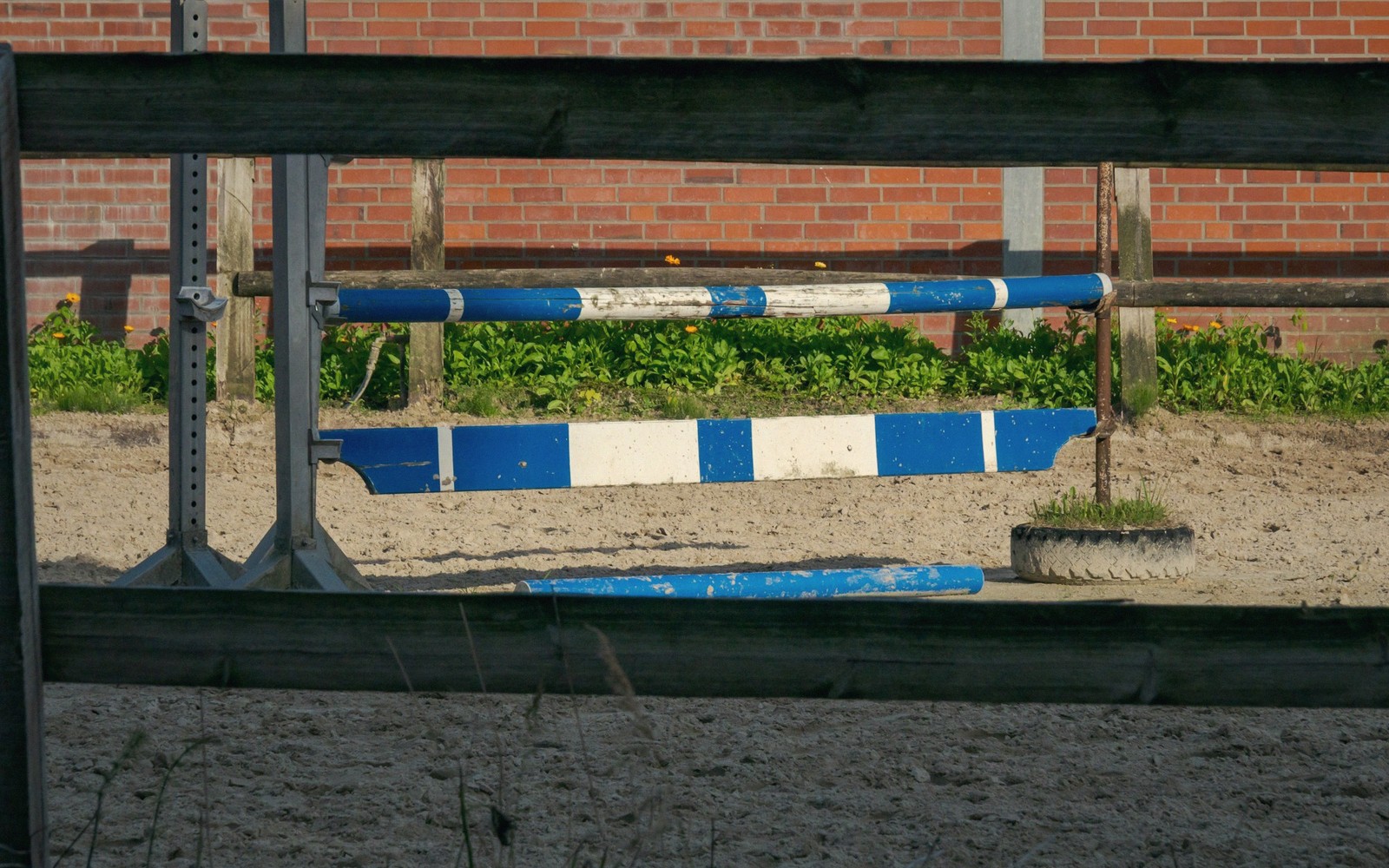
The ground changes too, gradually and then noticeably. In a large class, the take-off and landing zones in front of frequently jumped fences — particularly a double or combination — become softer and more cut-up as the class progresses. Horses later in the draw encounter subtly different footing than those who went early. A slight hole at take-off, or a surface that gives more under foot, alters the horse's stride and jump in ways no amount of planning can fully anticipate.
Track decoration also shifts. When a fence is knocked down, the poles are reset and the arrangement adjusted by the fence crew; occasionally a cup is tightened, the fill rearranged, or a damaged element replaced. This is normal maintenance, but it means the fence the fortieth horse jumps is not, in every detail, identical to the one the fourth horse faced.2
Why the last ten go differently
The closing portion of a class is where following the draw order pays off most richly as a spectator's tool. By this point the scoreboard tells a story: how many clear rounds exist, what the fault distribution looks like, whether a jump-off is building or whether faults are accumulating quickly enough that a single clear might win the class outright. Riders entering the ring at this stage carry that information and, consciously or not, it shapes decisions — the line chosen, whether to press the pace, where to accept a steadying stride and where to chase the time.
If the class has produced several clears and a jump-off is forming, competitors with nothing to lose on the scoreboard may take risks that earlier riders wouldn't have contemplated. A rider sitting in first with one fence in hand rides entirely differently to one sitting sixth. Watch the approach to the treacherous fence that's been punishing the class all afternoon: do the final riders straighten their lines, widen the turn, or arrive in a rhythm noticeably different from those who knocked it down? The course has taught them, collectively, and what you're watching is applied intelligence.
There is one more variable: nerves and crowd energy compound as a class narrows to its final horses. Whether or not that changes outcomes is impossible to measure, but it is unambiguously present in the atmosphere — the collecting ring quieter, the scoreboard watched more intently, the moments between fence landings carrying more weight.
Following a class from first to last, rather than dipping in and out, transforms show jumping from a sequence of disconnected efforts into what it actually is: a progressive examination in which the track asks its questions and a field of horses and riders answers them, one at a time, each round informed by every round before it.
- draw order
- the ballot-determined sequence in which competitors enter the ring
- related distance
- a measured ground line between two fences that influences stride count
- time allowed
- the maximum time in which a clear round must be completed
- combination
- two or three fences set as a single numbered obstacle with defined distances between elements
Every figure in this guide is indicative. Heights, spreads, speeds and distances vary between levels and federations, and the rules of the competition being run always govern.