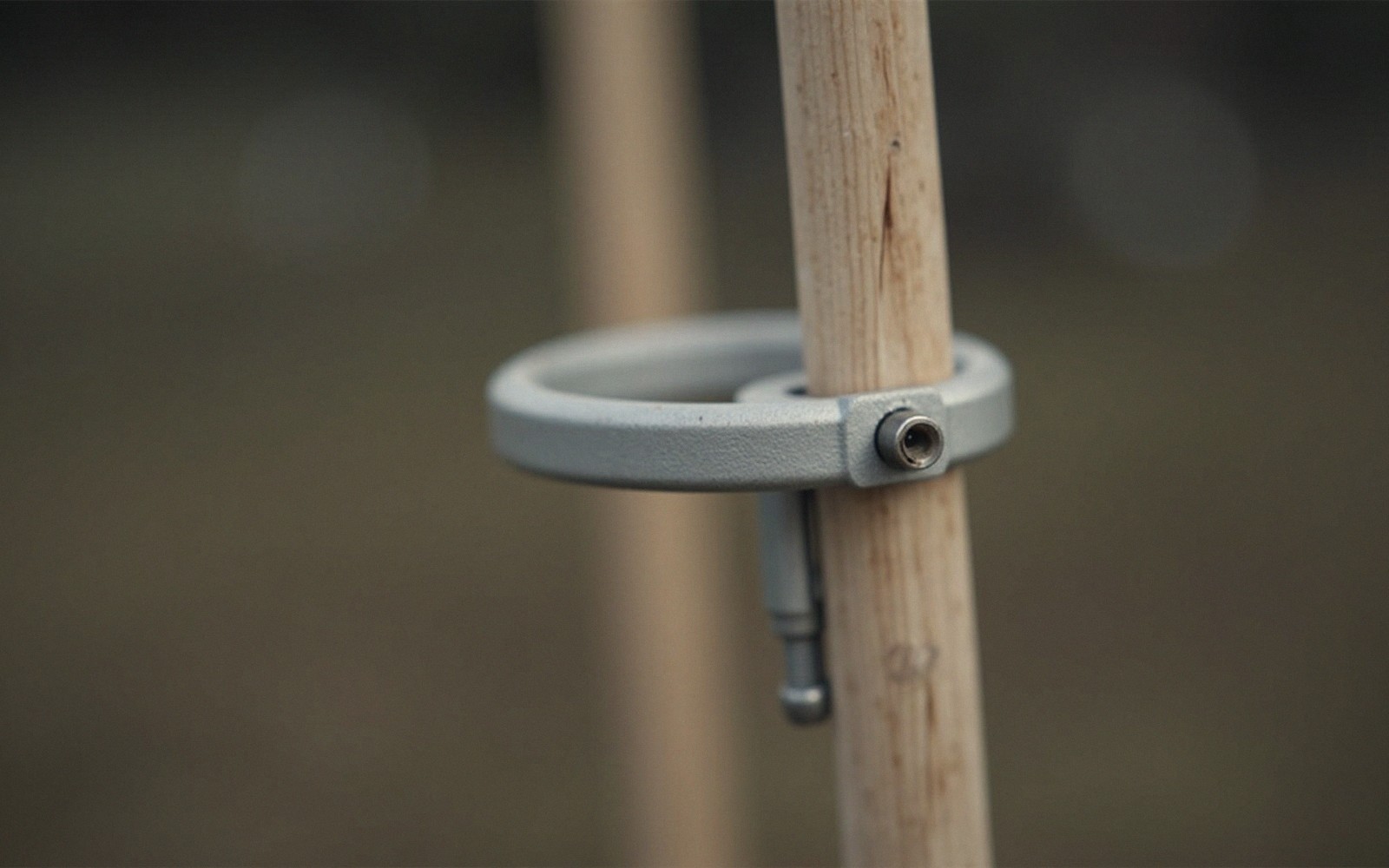
The fence looks like the story. The hardware holding it together is actually the plot.
A show jump rail — the pole a horse can knock — rests in two cupsCupThe bracket holding a pole, shallow at the front so the rail rolls out. bolted or clipped to the uprights on either side. That cup is the hinge point of the whole scoring system. Too deep, and the rail grips: a horse that clips it cleanly takes the pole with it rather than displacing it, turning a touch into a fall risk. Too shallow, and the cup barely holds the rail at all, rattling loose in a breeze. The geometry matters: modern cups are engineered to release the rail at a defined threshold of force — enough to hold under light contact, enough to give way under real pressure from a hoof or a fetlock.
Standard cups, the kind used for most poles, are open half-rounds — a simple cradle of metal or heavy plastic. A course builder sets the rail into them; gravity and the rail's weight do the rest. The variation comes in the details: cup width (affecting how much of the pole is supported), lip height (controlling how easily the rail rocks out), and material hardness. Plastic cups that look flimsy often outperform older metal designs precisely because they flex rather than grip.
Plastic cups that look flimsy often outperform older metal designs precisely because they flex rather than grip.
Show jumps are built to fall, and the cups are where that principle is most precisely engineered. The poles themselves are typically wooden, ranging from lightweight birch to denser pine and eucalyptus, and their weight matters: a heavier pole needs more force to dislodge, which effectively raises the margin for error. Lighter poles roll at a touch, which suits higher classes where the intent is to separate horses on the finest distinctions.
The third element — beyond cups and poles — is the safety device. These come into play at the back rail of an oxerOxerA spread fence with two sets of rails, asking for width as well as height. or at the top of a combinationCombinationTwo or three obstacles a strideStrideOne full canter step, roughly 3.5 m in a working competition canter. or two apart, numbered A, B and C. or two apart, numbered A, B and C. or two apart, numbered A, B and C. element that collapses on impact. The safety cup is shallower still than a standard open cup, sometimes no more than a notch or a clip. Its job is to ensure that if a horse lands inside an oxer and strikes the back rail from the front, the rail falls rather than holds — protecting the horse from being trapped or flipped. FEI rules mandate their use in specific situations; the course builder has no discretion there.
All of it — cups, poles, clips, pins — is checked and reset by the fence crew between every round. A displaced cup, a hairline crack in a pole, a safety device that has worked loose: none of it is visible from the grandstand, but every detail shapes whether the next round is fair. The elegance of a clear roundClear roundA round completed with no jumping faults and inside the time allowed. rests on hardware nobody applauds.1
The ground jury
Officials of the competition
Judge the round, rule on faults and eliminations, and settle anything this guide only summarises.
Role, not a named person.
Every figure in this guide is indicative. Heights, spreads, speeds and distances vary between levels and federations, and the rules of the competition being run always govern.
- Safety cups are mandated by the FEI in defined situations. ↩
- Crews reset and check the hardware between every round.