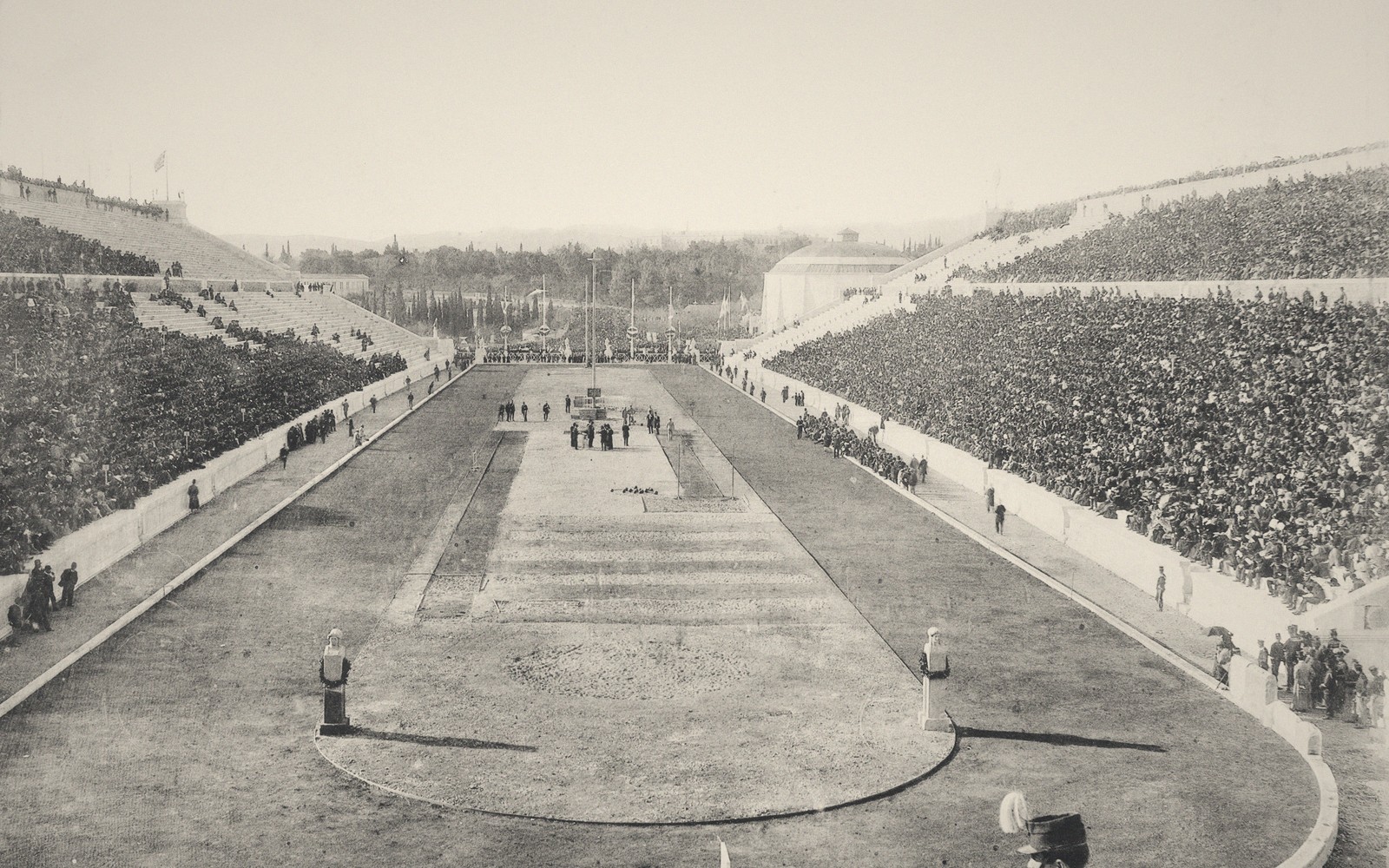
Show jumping's Olympic story begins not with a pristine arena and carbon-fibre poles but with military men on war horses, riding fences that were meant to stay up. To understand what the sport has become — the razor-thin time allowances, the collapsible rails, the jump-offsJump-offA shorter, faster second round for those who finished clear. decided by hundredths of a second — you have to start at the beginning of the twentieth century, when equestrian competition was still inseparable from soldiering.
- 1900equestrian events debut at modern Olympics (Paris)
- 1912unified equestrian programme, Stockholm; military officers only
- 1921FEI founded, establishing international rulebook
- 1950sFEI World Championships established
- 1952Helsinki Games; women admitted, civilian riders permitted
- 1990inaugural World Equestrian Games launched
The military origins and early Olympic decades
Equestrian events entered the modern Olympic programme in 1900, though the early appearances were irregular and the rules wildly inconsistent between host nations. It was the 1912 Stockholm Games that gave the equestrian disciplines — show jumping, dressage and the cross-country-rooted eventing — a coherent, unified stage for the first time. In Stockholm, riders were exclusively male military officers; civilians and women were excluded by regulation. The horses, too, were overwhelmingly cavalry mounts, bred for campaign rather than for the tight technical demands that would define the sport a generation later.
The international body that eventually brought order to this was the Fédération Équestre Internationale, the FEI, founded in 1921. Its formation was the precondition for everything that followed: a single rulebook, a shared framework for judging faults, and the infrastructure that allowed show jumping to function across borders as something genuinely comparable from nation to nation. Without the FEI, each country's riders would have gone on competing under subtly different conventions, and international results would have remained essentially meaningless.
The international body that eventually brought order to this was the Fédération Équestre Internationale, the FEI, founded in 1921.
For the first several decades of FEI governance, scoring was far messier than the clean four-fault system spectators know today. Judges exercised substantial discretion. Time was a secondary consideration rather than the disciplining force it has since become. Fences were typically heavy, constructed to remain fixed on impact; a horse that hit a rail might earn penalty points rather than the automatic, objective consequence of a pole rolling to the ground. The subjectivity that pervaded scoring made the sport difficult to follow and, critics argued, open to inconsistency that no amount of judicial care could fully resolve.1
The postwar transformation
The decades following the Second World War brought the two changes that most visibly reshaped show jumping into its modern form. The first was the gradual shift toward objective, fault-based scoring — a rail down equals four faults, a refusal equals four faults, a fall eliminates — stripping discretion from the equation and making results legible to any spectator with basic knowledge of the rules. The second was the widespread adoption of the collapsible fence: rails resting in cupsCupThe bracket holding a pole, shallow at the front so the rail rolls out. designed to fall on contact, turning the question of whether a horse clears a fence into a purely physical, instantly verifiable fact. These two developments reinforced each other. An objective scoring system only works when the evidence it relies on is equally objective; collapsible fences provided exactly that.
The Olympic Games tracked and amplified these changes. Each edition of the Games created an occasion for the FEI and national federations to examine their rules, address inconsistencies and raise or clarify standards. The 1952 Helsinki Games are a landmark in this regard: women competed in Olympic equestrian events for the first time, and the field was opened beyond serving military officers. This was not merely a social shift — it changed the sport's competitive pool, its training culture, and ultimately its riding style. A discipline once defined by cavalry traditions began evolving toward the more technical, athletically refined horsemanship that characterises elite competition today.
Course design evolved in step with the athletes. The sprawling, relatively simple tracks of the early Olympic era gave way to progressively tighter, more inventive layouts. Designers began exploiting related distancesRelated distanceTwo fences close enough that the stridesStrideOne full canter step, roughly 3.5 m in a working competition canter. between them are counted. between them are counted. between them are counted. — the measured ground between two fences that forces a horse into a predetermined number of strides — as a primary tool for testing accuracy rather than mere bravery. CombinationsCombinationTwo or three obstacles a stride or two apart, numbered A, B and C., water jumps and angles became fixtures. The questions asked of a horse and rider grew more sophisticated, demanding not raw courage but precise athleticism, repeatable technique and an ability to adjust within a line at speed.2
Championships, expansion and the modern era
Beyond the Olympics, the latter half of the twentieth century saw show jumping's championship calendar expand dramatically. The FEI World Championships were established in the 1950s, the continental championships followed across subsequent decades, and the Nations Cup series gave teams a regular international circuit rather than a single quadrennial test. The World Equestrian Games, launched in 1990, bundled the FEI's disciplines into a single major championship, giving show jumping a global stage midway between Olympic Games. This proliferation of elite competition accelerated the sport's development: more high-stakes rounds, more riders tested at the highest level, and a constant pressure on course designers and rule-makers to ensure that competition remained genuinely demanding.
Television brought the sport to audiences who would never attend a show, and the Olympic Games served as the gateway through which most of those viewers encountered it. The visual grammar of the sport — the fence, the take-off, the aerial moment, the rail or the clear — is intuitive to a cold audience in a way that few other equestrian disciplines can claim. That accessibility has always made show jumping the discipline most likely to carry equestrian sport into the wider sporting conversation, and the Olympic platform reinforced that position at every Games.
The sport's relationship with the Olympics has not been without tension. Debates over amateur status, course difficulty, team formats and qualification criteria have surfaced repeatedly over the decades, reflecting broader struggles within the Olympic movement as much as disputes specific to equestrian competition. Team formats have changed — the number of riders per nation, the number of scores that count, the treatment of eliminations — and individual gold medals have sometimes shared the card with team events whose formats shifted between editions. Each change reshaped strategy, altered which nations could field competitive squads and redefined what it meant to win.
The ground jury
Officials of the competition
Judge the round, rule on faults and eliminations, and settle anything this guide only summarises.
Role, not a named person.
What a century of competition made
The sport that arrives at each modern Olympic Games is the accumulated product of all of this: a century of rule refinement, equipment development, course design innovation and competitive pressure applied at the highest level. The fences are lighter and more technical than the fixed obstacles of the early twentieth century; the scoring is cleaner and more objective; the time allowed is precise and unforgiving; the jump-off, where classes go to a final accelerating round to split tied leaders, is a fixture that simply did not exist in the sport's early forms.
What has not changed is the essential contest: one horse, one rider, one track, and the question of whether they can get from the start line to the finish with nothing on the ground and the clock on their side. The Olympic era did not invent that question. It spent a century sharpening it.
Every figure in this guide is indicative. Heights, spreads, speeds and distances vary between levels and federations, and the rules of the competition being run always govern.