Walk the course before you watch the sport.
Show jumping looks like a series of fences. It is really a series of decisions, made in order, at speed — and the plan the designer drew is where they all begin.
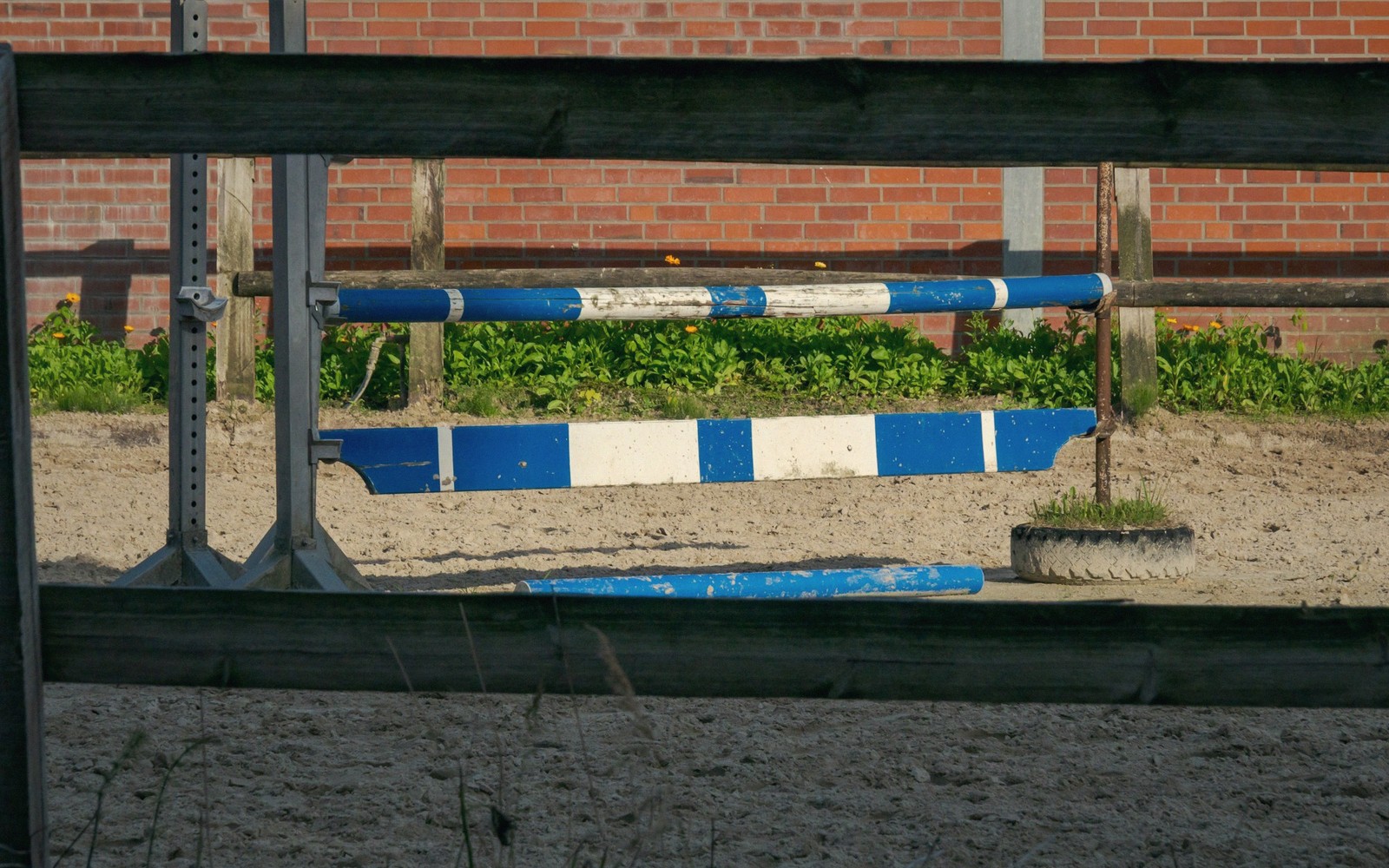
The walk, in six steps
Read in order, or don'tClick any fence. See the line, the strides, and why it is exactly there.
The opener
- Height
- 1.30 m
- Spread
- —
- Approach
- —
- Strides
- — not a counted distance
The line
Straight off the left rein, met out of a forward canter with nothing asked of it.
Why it is there
An opener exists to settle the round. It is deliberately soft so the horse reads the light and the footing before the track starts asking questions.
The first true question
- Height
- 1.35 m
- Spread
- 1.40 m
- Approach
- 22 m from 1
- Strides
- five strides, related
The line
Five forward strides on a straight line, so the stride you land on is the stride you jump from.
Why it is there
The first width of the round, set on a related distance — it checks whether the canter you opened with is genuinely rideable.
The turn fence
- Height
- 1.40 m
- Spread
- —
- Approach
- —
- Strides
- — not a counted distance
The line
Off a right-handed turn, arriving on an angle unless the rider straightens early.
Why it is there
Placed just after the turn so the horse sees it late. It punishes riders who let the shoulder drift through the corner.
The ascending spread
- Height
- 1.40 m
- Spread
- 1.75 m
- Approach
- —
- Strides
- — not a counted distance
The line
Ridden forward off a long approach down the top of the arena.
Why it is there
The widest effort on the track. It needs genuine gallop, which sets up the trap of arriving too big at the combination that follows.
Combination, in
- Height
- 1.45 m
- Spread
- —
- Approach
- 29 m from 4
- Strides
- seven strides, related
The line
Seven strides from the triple bar, on a dead-straight line along the top rail.
Why it is there
A related distance sets the trap: ride seven and arrive close, add an eighth and arrive weak. The whole combination turns on this decision.
Combination, out
- Height
- 1.42 m
- Spread
- 1.50 m
- Approach
- one stride
- Strides
- one stride
The line
One stride out of 5A — no room to adjust, so the answer was given on the approach.
Why it is there
A one-stride to a width is the classic accuracy test: too big at the in, and the horse has nowhere to put the front end at the out.
The water tray
- Height
- 1.35 m
- Spread
- 1.45 m
- Approach
- —
- Strides
- — not a counted distance
The line
Down the left side, off a soft left turn with the tray on the landing side.
Why it is there
Water under a rail changes nothing physically and everything mentally. Horses back off the shine, so this fence tests the leg, not the eye.
The wall
- Height
- 1.40 m
- Spread
- —
- Approach
- —
- Strides
- — not a counted distance
The line
Across the middle of the arena on the left rein, met square.
Why it is there
A solid-looking face this late in the round asks a tiring horse to keep its shape. Blocks fall easily; the fence is less severe than it looks.
The last width
- Height
- 1.45 m
- Spread
- 1.55 m
- Approach
- 19 m from 7
- Strides
- four strides, related
The line
Four strides on from the wall, and the last chance to make up ground before the turn home.
Why it is there
The biggest oxer of the round placed where the horse is tiring. Riders who saved the canter here jump it; riders who spent it early do not.
The last
- Height
- 1.40 m
- Spread
- —
- Approach
- —
- Strides
- — not a counted distance
The line
Off a right turn to the finish beam, with the crowd behind it.
Why it is there
A plain vertical at the end of a long track. Nothing technical is left — it simply asks whether the horse is still rideable and straight.
Diagram: a representative track drawn for this guide — not a competition plan. The dashed line is the designer's intended route; the solid brass line is the approach to the selected fence.
The same track as a table — every fence, in order
| No. | Obstacle | Height | Spread | Approach | Strides |
|---|---|---|---|---|---|
| 1 | The opener vertical | 1.30 m | — | — | — |
| 2 | The first true question oxer | 1.35 m | 1.40 m | 22 m from 1 | five strides, related |
| 3 | The turn fence vertical | 1.40 m | — | — | — |
| 4 | The ascending spread triple bar | 1.40 m | 1.75 m | — | — |
| 5A | Combination, in vertical | 1.45 m | — | 29 m from 4 | seven strides, related |
| 5B | Combination, out oxer | 1.42 m | 1.50 m | one stride | one stride |
| 6 | The water tray liverpool | 1.35 m | 1.45 m | — | — |
| 7 | The wall wall | 1.40 m | — | — | — |
| 8 | The last width oxer | 1.45 m | 1.55 m | 19 m from 7 | four strides, related |
| 9 | The last vertical | 1.40 m | — | — | — |
Four faults: add a rail, a stop, a second.
A rail is four faults. A first refusal is four. Every second over the time allowed is one more, and a second only has to start to count.
Build a round in the calculator and watch the scoreboard make its judgement. The arithmetic is the easy part; what it hides is that almost every rail was decided two fences earlier.
What the numbers on a class mean
Heights & levels| Class height | Max height | Max spread | Where you see it | Speed m/min |
|---|---|---|---|---|
| 0.90–1.00 m | 1.00 m | 1.10 m | Club and unaffiliated classes | 325 m/min |
| 1.10 m | 1.10 m | 1.20 m | Entry affiliated classes | 325 m/min |
| 1.20 m | 1.20 m | 1.30 m | National amateur classes | 350 m/min |
| 1.30 m | 1.30 m | 1.40 m | National open classes | 350 m/min |
| 1.40 m | 1.40 m | 1.55 m | International lower tours | 375 m/min |
| 1.50 m | 1.50 m | 1.70 m | International middle tours | 375 m/min |
| 1.60 m | 1.60 m | 2.00 m | Championship and top tour | 400 m/min |
Indicative figures. The exact maxima and the speed are set by the rules of the competition being run.
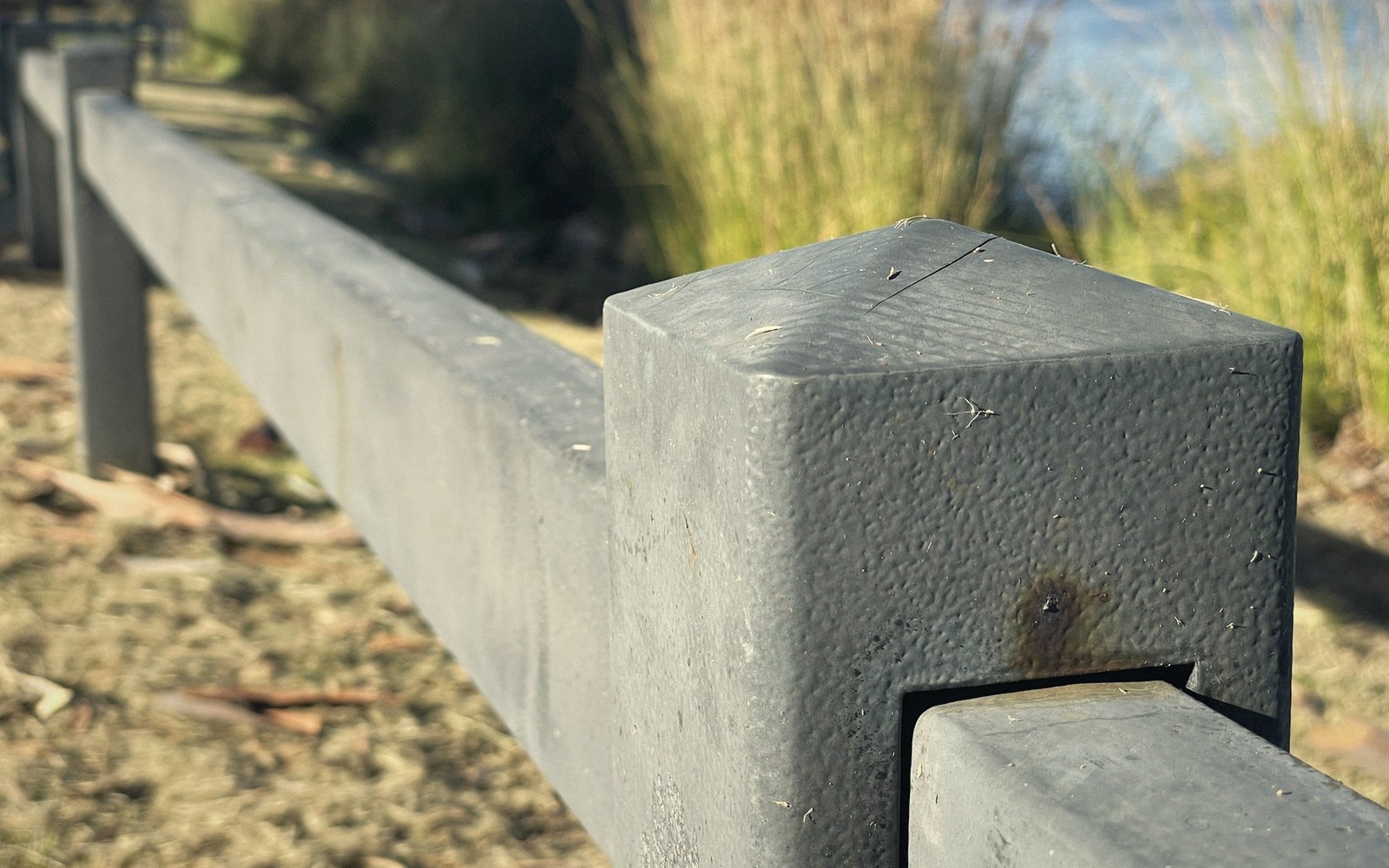
A show jump is built to fall down.
Solid enough to be respected, fragile enough that hitting it costs four faults rather than a fall. Every piece of hardware in the ring follows from that one requirement.
Further along the walk
Explainers Course Design
How a Course Is Actually Built
A track is written before anyone rides it: distances, angles, light and the questions in between.
By the RM Show Jumping desk · 7 min read
Course Design
How a Course Is Actually Built
A track is written before anyone rides it: distances, angles, light and the questions in between.
By the RM Show Jumping desk · 7 min read
 Watching Guide
Reading a Round: A Spectator's Guide
What to look at, in what order, so a round stops being a blur.
By the RM Show Jumping desk · 6 min read
Watching Guide
Reading a Round: A Spectator's Guide
What to look at, in what order, so a round stops being a blur.
By the RM Show Jumping desk · 6 min read
 Faults & Scoring
The Jump-Off, Explained
The second round that decides the class — shorter, faster, and a different sport entirely.
By the RM Show Jumping desk · 3 min read
Faults & Scoring
The Jump-Off, Explained
The second round that decides the class — shorter, faster, and a different sport entirely.
By the RM Show Jumping desk · 3 min read
 Faults & Scoring
Four Faults: What Just Went Wrong
A rail is four. A refusal is four. A second over is one. The arithmetic that decides everything.
By the RM Show Jumping desk · 7 min read
Faults & Scoring
Four Faults: What Just Went Wrong
A rail is four. A refusal is four. A second over is one. The arithmetic that decides everything.
By the RM Show Jumping desk · 7 min read
 Fences & Equipment
Verticals, Oxers, Triples: A Fence Taxonomy
What each shape asks of the horse, and how to spot the difference from the stands.
By the RM Show Jumping desk · 7 min read
Fences & Equipment
Verticals, Oxers, Triples: A Fence Taxonomy
What each shape asks of the horse, and how to spot the difference from the stands.
By the RM Show Jumping desk · 7 min read
 History
Show Jumping Through the Olympic Era
How the sport arrived at its modern shape across a century of championship competition.
By the RM Show Jumping desk · 6 min read
History
Show Jumping Through the Olympic Era
How the sport arrived at its modern shape across a century of championship competition.
By the RM Show Jumping desk · 6 min read
Who stands at the rail with us
 SLAYED keeps your browser sharp — much like a well-placed oxer keeps a round fault-free.
 He's Got Rizz proves charm and confidence clear every obstacle, on course or off.
 FTMMen celebrates authentic identity the way show jumping celebrates its purest traditions.
 Bang Bus has been touring since 1999 — longer than some show jumping dynasties.
 Mom Is Horny reminds us some experienced riders always demand the reins back.
 GenderX Films shows the arena isn't the only place where boundaries get redefined.
 Reality Junkies ride every trend hard, just like a course rider reading each fence.
 JoyMii values real connection, much like the bond every rider builds with their horse.
 Brazzers Exxtra delivers an uncategorized course of action with maximum production value.
 Bratty MILF knows, like a refusal at the fence, she's not taking no for an answer.
 Family Dick: because even the most technical equestrian sport deserves a sponsor with audacious flair.
 NFBusty proves some athletes aren't the only ones with impressive form.
Yards, oxers and arenas we share the sport with.