From Blank Arena to Paper Plan
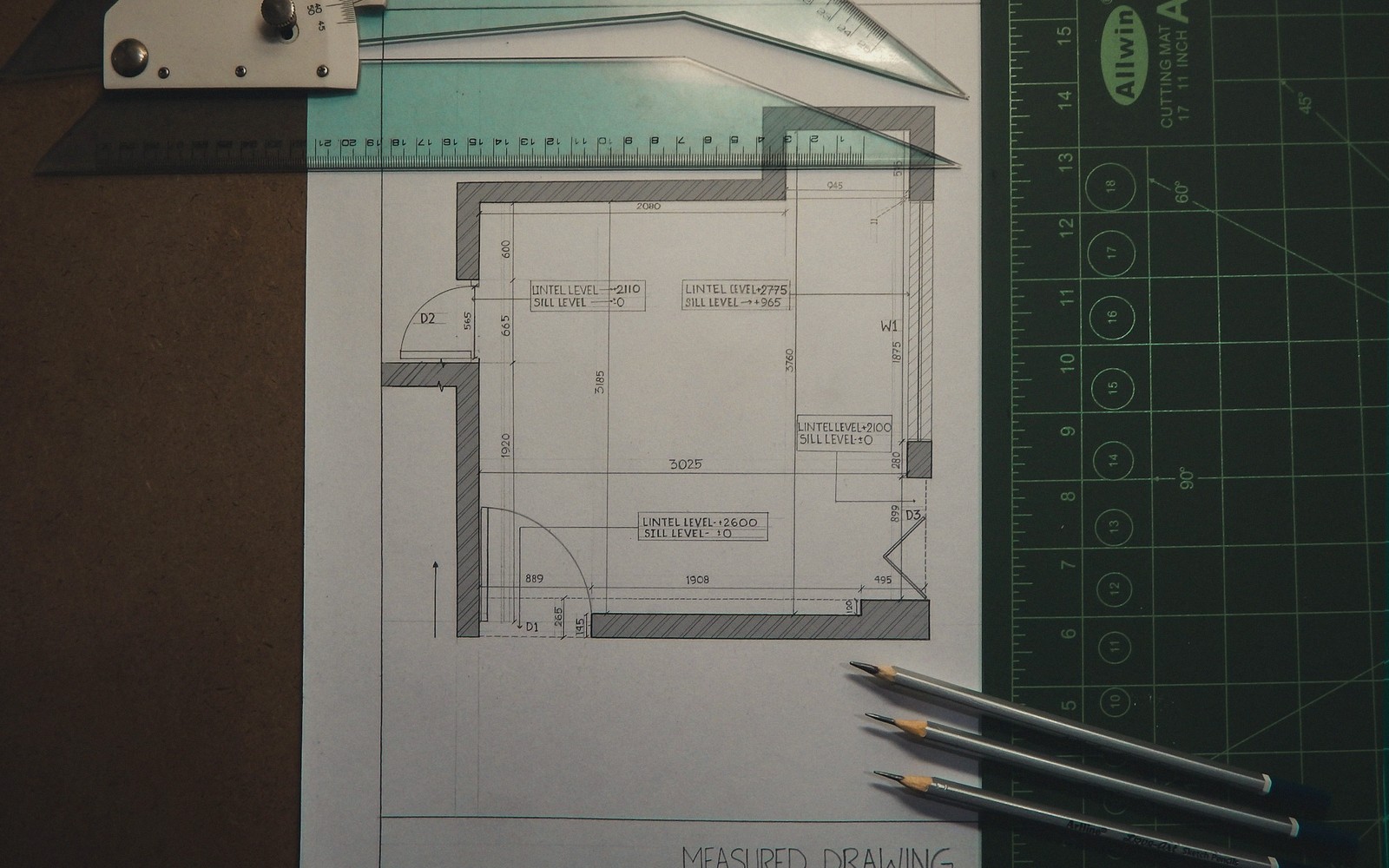
Before a single wing is unloaded from the lorry, a course exists as a drawing. The course designer begins with a scale plan of the arena — outdoor grass fields vary enormously, but many international indoor venues fix the designer within a rectangle not much larger than a generous garden — and places every fence number by pencil, or increasingly by specialist software, calculating the distances between them to the centimetre before a pole is touched.
That plan is the real work. The fences themselves, heavy and awkward as they are, go where the drawing says they go. The distances between related fences — the combinationsCombinationTwo or three obstacles a strideStrideOne full canter step, roughly 3.5 m in a working competition canter. or two apart, numbered A, B and C. or two apart, numbered A, B and C. or two apart, numbered A, B and C. and related lines where the number of strides is implied by the spacing — are usually walked, measured by a tape or a calibrated wheel, then checked again. A difference of half a metre in a one-stride combination changes the question the fence is asking from difficult to impossible or from testing to trivially easy. The designer is, in the first instance, an architect who works in metres and degrees.
The class height shapes everything that follows. A course set at 1.20m asks for different distances, different fence types and different angles than one set at 1.50m, because the horse's stride at speed and the arc of a bigger jump are materially different. Experienced designers carry those numbers internally and adjust almost instinctively, but the arithmetic is always checked. The FEI and national federations publish tables of ideal distances for each stride count at each level, and the designer's art is knowing when to use the table and when to depart from it deliberately.1
Experienced designers carry those numbers internally and adjust almost instinctively, but the arithmetic is always checked.
The Questions a Designer Writes Into a Track
A well-built course is a sequence of problems, each solvable by a correct ride, none solvable by accident. The designer is choosing, fence by fence, what question to ask: is the question pace, accuracy, adjustability, or courage? A long galloping approach invites speed; a turn onto a verticalVerticalA single plane of rails with no spread — a pure height and accuracy question. immediately after a wide oxerOxerA spread fence with two sets of rails, asking for width as well as height. demands that the rider collect without losing impulsion. The best courses mix the vocabulary — open fences that reward the forward horse, tight turns that reward the disciplined one, related distancesrelated distancea gap between fences implying a specific number of strides without being a formal combination that reward the rider who has been counting strides since fence three.
The track's geometry — the shape of the course as a whole — is not decorative. It determines where the horse will naturally carry pace and where it will be naturally compressed. A sweeping arc of three fences on the long diagonal invites riders to open up; a right-angle turn hidden after a corner of the arena compresses them. The designer uses the arena's own geography as part of the test, and a fence sited at the arena's far end, away from the collecting ring entrance, is harder than the same fence sited near the gate — not because it is physically different, but because horses are drawn toward the exit and must be ridden away from it.
Light is a real consideration in outdoor arenas, and in some indoor venues too. A fence sited so that horses approach it out of bright sunlight into shade asks a different question than one they see clearly on the approach. Designers of long experience will check the position of the sun relative to the scheduled time of competition. It is one of dozens of variables that never appear on the plan but must be held in the designer's mind simultaneously.
The fence types are chosen to match the questions. Verticals, oxers and combination fences each make different demands on the horse's technique, and a course that places only verticals is as incomplete as one that places only spreads. The traditional build of a championship course includes at least one true combination — a double or treble, with the fences numbered A, B and (if a treble) C — and a water jump or liverpool where the rules of the competition permit. The combination is the designer's most powerful tool: it chains questions together so that a mistake at A creates a crisis at B, and a near-miss at B demands something unusual at C.2
The opener
An opener exists to settle the round. It is deliberately soft so the horse reads the light and the footing before the track starts asking questions.
Straight off the left rein, met out of a forward canter with nothing asked of it.
The first true question
The first width of the round, set on a related distance — it checks whether the canter you opened with is genuinely rideable.
Five forward strides on a straight line, so the stride you land on is the stride you jump from.
The turn fence
Placed just after the turn so the horse sees it late. It punishes riders who let the shoulder drift through the corner.
Off a right-handed turn, arriving on an angle unless the rider straightens early.
The ascending spread
The widest effort on the track. It needs genuine gallop, which sets up the trap of arriving too big at the combination that follows.
Ridden forward off a long approach down the top of the arena.
Combination, in
A related distance sets the trap: ride seven and arrive close, add an eighth and arrive weak. The whole combination turns on this decision.
Seven strides from the triple bar, on a dead-straight line along the top rail.
Combination, out
A one-stride to a width is the classic accuracy test: too big at the in, and the horse has nowhere to put the front end at the out.
One stride out of 5A — no room to adjust, so the answer was given on the approach.
The water tray
Water under a rail changes nothing physically and everything mentally. Horses back off the shine, so this fence tests the leg, not the eye.
Down the left side, off a soft left turn with the tray on the landing side.
The wall
A solid-looking face this late in the round asks a tiring horse to keep its shape. Blocks fall easily; the fence is less severe than it looks.
Across the middle of the arena on the left rein, met square.
The last width
The biggest oxer of the round placed where the horse is tiring. Riders who saved the canter here jump it; riders who spent it early do not.
Four strides on from the wall, and the last chance to make up ground before the turn home.
The last
A plain vertical at the end of a long track. Nothing technical is left — it simply asks whether the horse is still rideable and straight.
Off a right turn to the finish beam, with the crowd behind it.
Building the Physical Course
On the morning of competition, the designer oversees the build crew — a team of experienced arena staff who know exactly how to read the plan. Fences are brought in from storage, each wing and filler and pole labelled or colour-coded to match the designer's specification. The crew set the first fence, measure the approach, set the second, check the distance to the third. Major venues can hold fifty or sixty fence components in the lorry park outside; managing the logistics is itself a skill.
The poles and cups are set with precision. The cups that hold the rails must be appropriate for the level — safety cups with lower release thresholds are now mandated at the highest levels of international competition, having been phased in gradually over several decades of rule revision. A pole that holds under the impact of a horse's leg rather than releasing cleanly is a safety failure as well as a sporting one. The designer, or a trusted assistant, checks every cup setting before the first horse enters the ring.
Ground conditions affect everything and can require last-minute adjustment. A soft or uneven patch of turf may move a fence by a metre to preserve the intended distance. Rain overnight changes the likely ground time and therefore the time allowed calculation. An indoor surface that has been used for equestrian sport all week may be deeper in one corner than another. The designer must adapt; the plan is a target, not a contract.
The course is then walked — formally, by the riders, in the period before competition begins. Riders pace the distances, count strides, assess angles, discuss related lines with their trainers. It is during this walk that the designer's intentions become visible: the turn that looked simple on the plan reveals itself as sharper than expected, or the combination distance that seemed demanding resolves as comfortable if the horse meets the first fence well. Riders who walk carefully and precisely extract far more information from those twenty minutes than those who walk casually. What the designer embedded in the distances and angles, the good rider reads.3
The Standard the Course Must Meet
A course is not considered well designed if it is merely hard. Difficulty imposed by physical scale — fences simply very large — is the least interesting kind of difficulty and, at the lower levels, actively counterproductive. The best designers create tests that produce a spread of scores: a handful of clears that go to a jump-off, a larger group with one or two faults, and the rest spread further down the order. A course that eliminates the entire field is poorly calibrated; one that produces thirty clears is too straightforward. The designer is aiming at a particular distribution of outcomes, and reading the results of earlier classes in the day informs their decisions for later ones.
At championship level, that calibration becomes more acute. The Olympic Games, the FEI World Championships, and the continental championships all require courses that test the best horses and riders in the world without producing a lottery. The designer must create a track that separates them honestly — where the rider who makes a plan and executes it clearly beats the one who does not — without producing attrition through sheer size. A well-designed championship course tends to have one or two fences that collect the majority of faults, a combination that rewards the technically correct approach, and a time allowed that is genuinely but not viciously demanding.
When the course achieves what it intends — when the scores spread correctly, when the best riders distinguish themselves, when the horses arrive at the final fence still going — the designer's work is invisible. Nobody walks out of a great competition remarking on the course design. They remark on the riding. That invisibility, earned through all those distances measured and angles chosen and cups checked before dawn, is precisely what the designer is working toward.
The course designer
Licensed official
Plans the track before anyone rides it: fence types, distances, angles and the time allowed. Oversees the build and adjusts for ground and light.
A role on every show, described here without naming individuals.
The fence crew
Arena team
Resets rails between rounds, checks cups and safety devices, and keeps every round on the same track as the one before it.
Role, not a named person.
The ground jury
Officials of the competition
Judge the round, rule on faults and eliminations, and settle anything this guide only summarises.
Role, not a named person.
- combination fence
- two or three fences in sequence, numbered A/B/C, with set distances between them
- related distance
- a gap between fences implying a specific number of strides without being a formal combination
- course plan
- scale drawing of the arena showing fence positions, numbers and distances before build
- time allowed
- the time limit set for a round, beyond which time faults accrue
Every figure in this guide is indicative. Heights, spreads, speeds and distances vary between levels and federations, and the rules of the competition being run always govern.