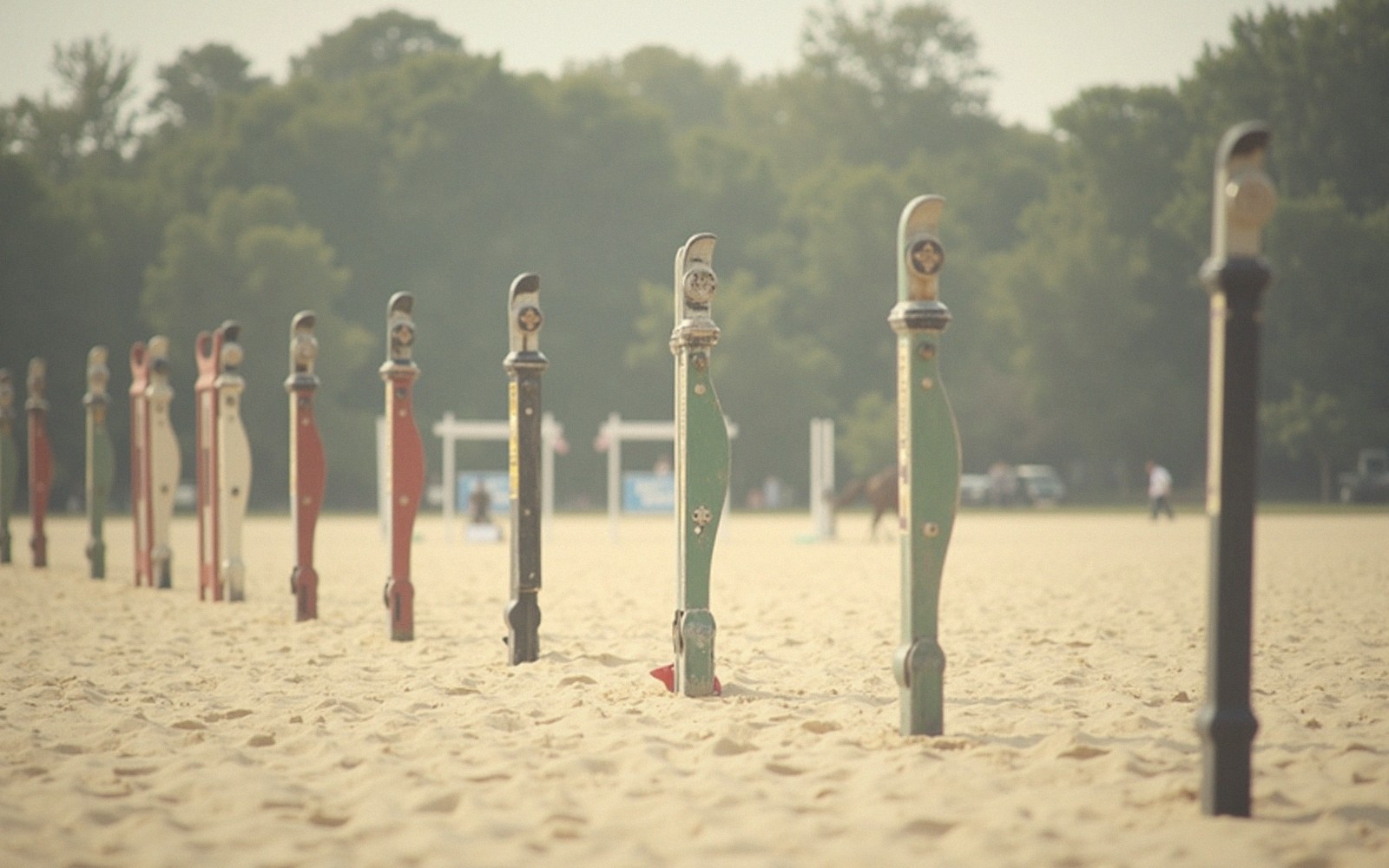
A show jumping class is usually advertised with a number: 1.20m, 1.30m, 1.45m. That number is the maximum height of the fences on the course — or, more precisely, the height the course designer has been asked to build to. It is a ceiling, not a uniform. Individual fences on any track will vary: an early verticalVerticalA single plane of rails with no spread — a pure height and accuracy question. might be trimmed a notch or two below the class height to let horse and rider settle; a late combinationCombinationTwo or three obstacles a strideStrideOne full canter step, roughly 3.5 m in a working competition canter. or two apart, numbered A, B and C. or two apart, numbered A, B and C. or two apart, numbered A, B and C. will be right at the top. The number on the schedule tells you the hardest question asked in that arena, not the average.
What the number does not describe is width. An oxerOxerA spread fence with two sets of rails, asking for width as well as height. at 1.45m might spread 1.60m or more — the designer controls that independently — and width is often where the real difficulty lives. A table, a triple barTriple barAn ascending spread of three elements, the widest common obstacle., a wide Swedish oxer: all can be measured at the stated height while demanding something considerably more athletic than a single upright pole at the same level. The class height is the best single shorthand the sport has, but experienced observers read it alongside the track plan and the designer's reputation.1
Who jumps what
The levels form a rough but recognisable ladder. Classes below 1.10m are largely developmental: horses learning to school over courses, younger riders building mileage, or combinations preparing to step up. Around 1.10m–1.20m, the work becomes more demanding — distances tighten, turns sharpen — and this range covers a broad middle ground of amateur and lower-level professional competition. Many riders spend most of their careers here, and the classes are typically the most populous at any show.
Many riders spend most of their careers here, and the classes are typically the most populous at any show.
From 1.25m upward the field thins. At 1.35m–1.40m, regional professionals and ambitious amateurs compete seriously; the fences begin to carry enough weight that a rail down carries real consequence in the standings. The 1.45m level — sometimes labelled a Grand Prix qualifier or a Welcomestake, depending on the show — marks a significant step. Horses need both scope and technique; riders need sharp, disciplined lines. Errors compound quickly at this height, and the jump-off — the second round that resolves ties — tends to separate the careful from the reckless.
At the elite end sits the 1.55m–1.60m bracket: Nations Cup rounds, major Grand Prix, and the height at which the Olympic Games are contested. A small number of horses are genuinely capable here. The fences are massive by any lay standard — the top rail is roughly level with a tall person's chin — but the defining feature is not size alone. Course designers at this level compress distances, introduce awkward angles, and thread fences through light changes and terrain to manufacture questions that raw scope cannot answer alone. Athleticism is necessary; it is not sufficient.2
Reading the number in practice
A few practical points sharpen what the number tells you. First, the same advertised height can feel very different depending on the course designer: a tight 1.35m on a technical track can unseat more combinations than a generous 1.45m on a wide, flowing one. Second, classes are sometimes described by level name — Premier, Classic, Grand Prix — which implies a height range without stating it precisely; checking the prize table or the schedule's technical details usually clarifies the actual maximum. Third, height rules vary between governing bodies and between indoor and outdoor disciplines, so the numbers are indicative of level rather than a single universal definition.
What the number reliably signals is the order of magnitude of the challenge. A spectator who spots 1.20m on the board can reasonably expect a competitive but accessible class; 1.60m tells them they are watching the top fraction of the sport. Between those anchors, the exact figure is a starting point for understanding a class, not the whole story — the questions in the ground, the time allowed, and the shape of the track fill in everything the number leaves out.
| Class height | Max height | Max spread | Where you see it | Speed m/min |
|---|---|---|---|---|
| 0.90–1.00 m | 1.00 m | 1.10 m | Club and unaffiliated classes | 325 m/min |
| 1.10 m | 1.10 m | 1.20 m | Entry affiliated classes | 325 m/min |
| 1.20 m | 1.20 m | 1.30 m | National amateur classes | 350 m/min |
| 1.30 m | 1.30 m | 1.40 m | National open classes | 350 m/min |
| 1.40 m | 1.40 m | 1.55 m | International lower tours | 375 m/min |
| 1.50 m | 1.50 m | 1.70 m | International middle tours | 375 m/min |
| 1.60 m | 1.60 m | 2.00 m | Championship and top tour | 400 m/min |
Indicative figures. The maxima and the speed for any class are set by the rules of the competition being run.
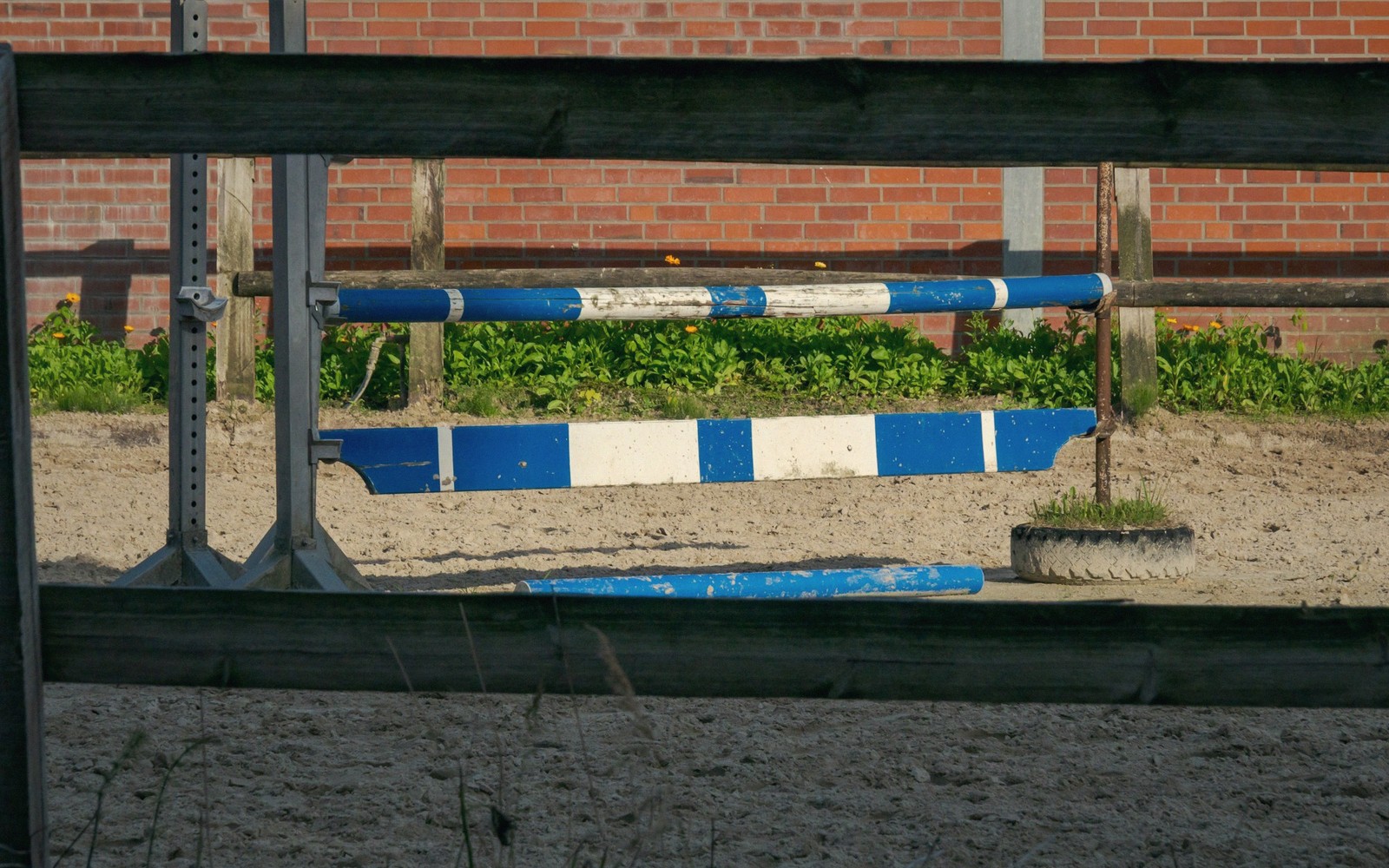
Every figure in this guide is indicative. Heights, spreads, speeds and distances vary between levels and federations, and the rules of the competition being run always govern.