A round that arrives with no context looks like noise: a horse cantering around a field, rails either staying up or not. Context collapses the chaos. Most of it is available before the bell even rings.
Watch the rider enter the arena. They have sixty seconds once the bell sounds, but the useful information is in how they use the time before it — the way they pick up canter, whether they take a wide sweep of the arena or cut straight to the first fence, how much they let the horse look around. A horse that spooks at the collecting-ring gate or props sideways past the combinationcombinationtwo or three fences at fixed distances, jumped as a single numbered obstacle is telling the crowd something the scoreboard won't. So is a horse that marches in loosely and boldly, ears pricking at each fence.
Now find the course plan — most major shows display it at ringside, and televised events will often show it between rounds. Locate the combination fence, usually numbered five, six or seven in a twelve-fence course. Combinations are where rounds are lost: three elements, related distancesrelated distancemeasured ground between two fences that influences how the horse meets the second, no room for error. Knowing where it sits on the course means you will be watching properly when the rider arrives at it, rather than realising something went wrong only as the horse bounces back out.
Combinations are where rounds are lost: three elements, related distances, no room for error.
Find the water jump, the wall, or any fence near the arena entrance. Horses frequently drift or spook at specific fence types or at the crowd-side of the ring. If a fence is positioned directly toward a dark tunnel exit or a flapping banner, that is not an accident — the course designer has asked a question with the environment, not just the fence. Being able to read those questions is exactly what separates the informed spectator from the puzzled one.1
Following the rhythm: what a good round actually looks like
Experienced eyes watch the canter. A round in good balance looks almost boring from the stands — the horse moves in a steady, rhythmical canter, and the fences simply happen within it. The rider appears to do very little. That apparent stillness is the point. When things go right, the horse arrives at each fence with energy contained and directed, neither running flat or scrambling back. The jump happens.
What breaks the illusion — and where you should focus — is any moment the rhythm changes. A sharp check three stridesStrideOne full canter step, roughly 3.5 m in a working competition canter. out, a sudden acceleration between fences five and six, the rider's body tipping forward early: these are the visible signs of negotiation. The horse and rider are disagreeing, or the distance is wrong, or the horse has seen something that concerned it. A rail coming down after one of these moments confirms what you already spotted. A rail coming down without any such visible warning is rarer and more interesting — it sometimes means the fence itself was marginal, or that the horse misjudged the arc of a wide oxerOxerA spread fence with two sets of rails, asking for width as well as height..
The jump-off changes this calculus entirely. In a jump-off, the rhythm the rider preserves in a first round is partly sacrificed for time — inside turns appear, corners get tighter, strides get added or removed between related fences. Watching a first-round clear roundClear roundA round completed with no jumping faults and inside the time allowed. and then watching the same pair go in the jump-off shows you the full range of the horse: what it can do carefully, and what it can do fast.
Pay particular attention to the combinations. A double or triple combination presents the horse with two or three consecutive fences at fixed distances — usually one or two strides between each. If the horse meets the first element slightly long, the distance compresses and the second element becomes harder. If it meets long and jumps extravagantly, the third element may come up almost immediately. Watch the first element: if the horse lands long and flat, brace for what happens next. If it lands in a compact, bouncing canter, the rest of the combination will usually be clean.2
The opener
An opener exists to settle the round. It is deliberately soft so the horse reads the light and the footing before the track starts asking questions.
Straight off the left rein, met out of a forward canter with nothing asked of it.
The first true question
The first width of the round, set on a related distance — it checks whether the canter you opened with is genuinely rideable.
Five forward strides on a straight line, so the stride you land on is the stride you jump from.
The turn fence
Placed just after the turn so the horse sees it late. It punishes riders who let the shoulder drift through the corner.
Off a right-handed turn, arriving on an angle unless the rider straightens early.
The ascending spread
The widest effort on the track. It needs genuine gallop, which sets up the trap of arriving too big at the combination that follows.
Ridden forward off a long approach down the top of the arena.
Combination, in
A related distance sets the trap: ride seven and arrive close, add an eighth and arrive weak. The whole combination turns on this decision.
Seven strides from the triple bar, on a dead-straight line along the top rail.
Combination, out
A one-stride to a width is the classic accuracy test: too big at the in, and the horse has nowhere to put the front end at the out.
One stride out of 5A — no room to adjust, so the answer was given on the approach.
The water tray
Water under a rail changes nothing physically and everything mentally. Horses back off the shine, so this fence tests the leg, not the eye.
Down the left side, off a soft left turn with the tray on the landing side.
The wall
A solid-looking face this late in the round asks a tiring horse to keep its shape. Blocks fall easily; the fence is less severe than it looks.
Across the middle of the arena on the left rein, met square.
The last width
The biggest oxer of the round placed where the horse is tiring. Riders who saved the canter here jump it; riders who spent it early do not.
Four strides on from the wall, and the last chance to make up ground before the turn home.
The last
A plain vertical at the end of a long track. Nothing technical is left — it simply asks whether the horse is still rideable and straight.
Off a right turn to the finish beam, with the crowd behind it.
The clock, the lines and the finishing stretch
It is easy to forget, while watching the jumps, that the clock is always running. Time faults arrive at a rate of one per second or part thereof over the time allowed, and they accumulate invisibly until the scoreboard updates. A cautious rider who completes a clear round but sweeps wide on every turn, re-collects laboriously before each fence and trots a moment after the final element will often pick up time faults that cost a placing. The time allowed is set to reward a forward, confident canter — not flat-out speed, but genuine impulsion.
Watch the lines the rider chooses between fences. A direct route from fence eight to nine, cutting across the diagonal, saves several seconds compared with the conventional arc. But a direct line also means arriving at the next fence from an unusual angle — and if the fence is a wide oxer or a fence with ground lines on only one side, the angle changes what the horse sees and asks for a more precise jump. The trade-off is visible from the stands: a rider going direct is betting that their horse's accuracy covers the time they gain.
In the last three or four fences, watch the pace. Some riders push for time in the final third of the course when they know the round has been clean, attacking the last line to compensate for a wide first half. Others settle — they have banked the clear round, they know they are inside the time allowed, and they are not risking a final fence for a single second. The strategy visible in those last fences often reveals how the combination is feeling about the course as a whole.
After the finish, look at the scoreboard and then at the horse and rider. The score is confirmed, but the genuinely informative moment is watching the debrief in the saddle: whether the rider is relaxed or tense, whether the horse has broken sweat across the neck and shoulders, whether it is blowing hard or has barely noticed the round. The horse does not lie. That brief window as they exit tells you, sometimes better than the replays, how much the round cost.
A round lasts roughly seventy-five to ninety seconds. Most of what is worth seeing is concentrated into about a dozen decision points — the approach to each fence, the line between them, the combination, the finish. Once you know where to look, the blur resolves into a sequence of real events, and the sport stops being something that happens and starts being something you can actually read.
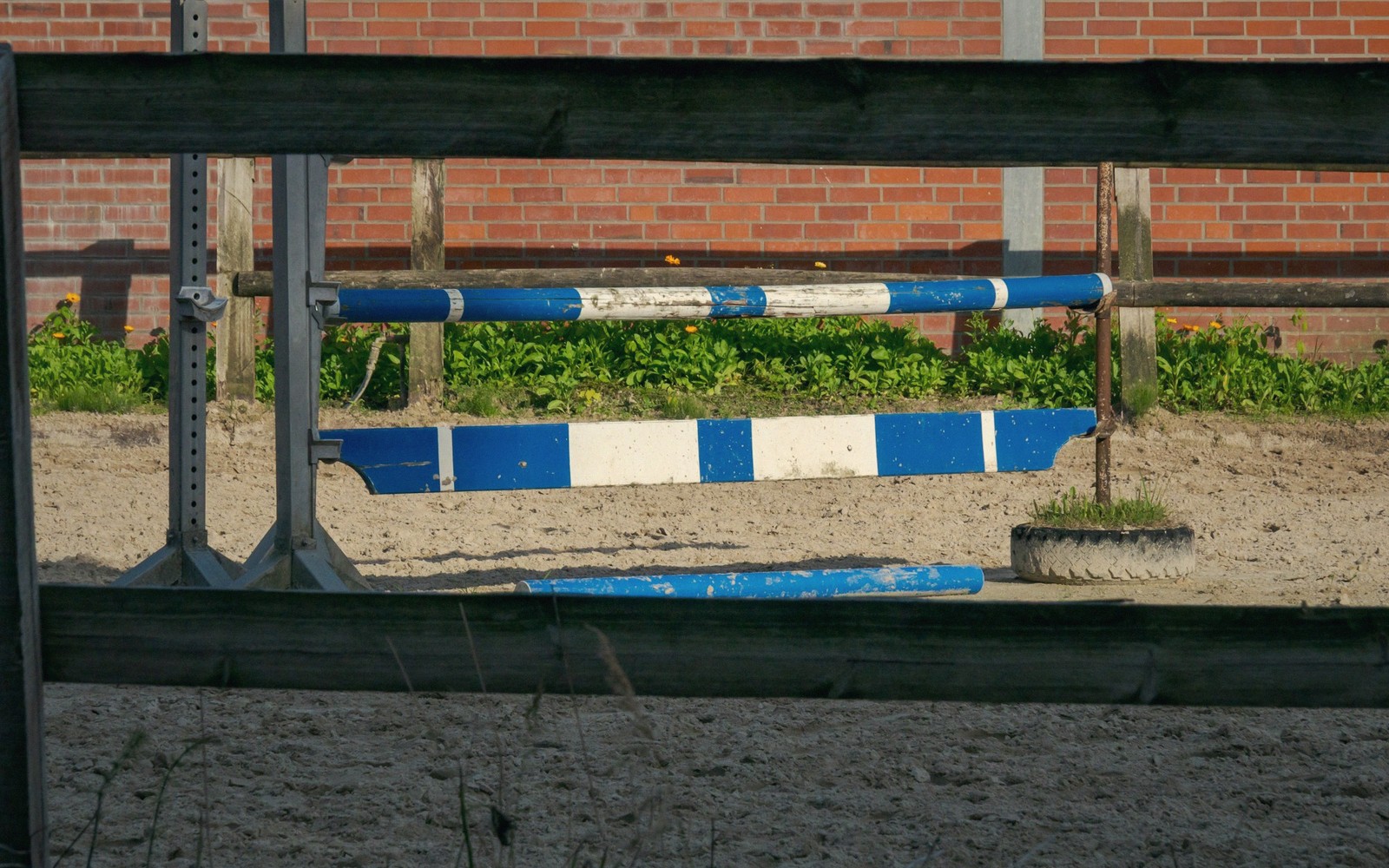
- combination
- two or three fences at fixed distances, jumped as a single numbered obstacle
- time allowed
- set duration for a round; each second over adds one time fault
- related distance
- measured ground between two fences that influences how the horse meets the second
- jump-off
- shortened second round used to separate tied clear rounds
Every figure in this guide is indicative. Heights, spreads, speeds and distances vary between levels and federations, and the rules of the competition being run always govern.